What does “be careful” mean to kids? Most of the time they believe they’re being careful – they just don’t have the same experience or foresight to see the potential danger as the adult admonishing them does. And the phrase often tends to mean “stop doing that” with no explanation as to why. “Be careful” is heard as a warning that what they were doing is dangerous and something they should be fearful of.
And something to think about the next time you start to say “be more careful next time” – according to a study in the Journal of Pediatric Psychology, girls are told to be more careful after injuries four times more often than are boys, leading the researchers to wonder if this may stop girls from trying those types of challenging activities that are out of their complete comfort zone. Before saying anything, do a quick risk assessment – is this activity really looking like it might cause a serious injury or are we just “hovering” a little too much?
Does the risk have a good possibility of causing more than a minor bump – falling from the top of a slide versus off a curb that’s being used as a balance beam? If so, then give specific information:
– Hang on with at least one hand when you’re up high
– Remember to have three limbs (arms/legs) touching when you’re climbing
– Is that branch strong enough to hold you?
– Let me know if you need assistance.
– Be aware of the barb wire on that fence.
If a major risk looks imminent, it’s better to say “STOP” and then talk about what’s happening:
– I noticed there are lots of loose rocks on that hill you’re running down. Are they slippery under your feet?
– Put your stick out as far as it will go – do you see how it touches Jim and Sue?
– If you go up there, what’s your plan for getting down?
– Remember it hurts to get hit by a rock.
– Remember that pans might be hot.
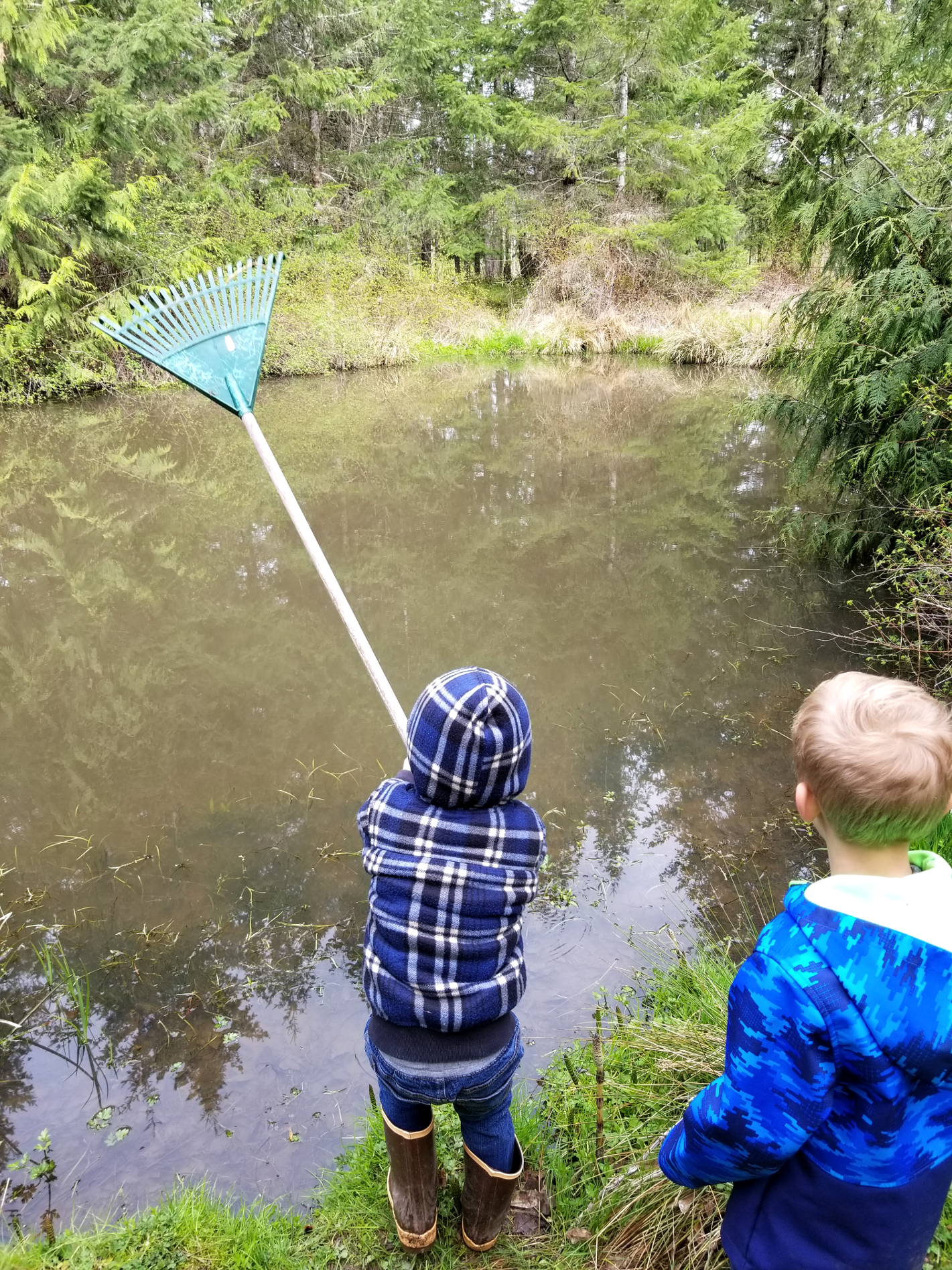
– Where is the edge of the pond?
– I’m noticing a lot of friends playing here. Where’s a place you can run where you won’t knock into them?
Part of what changing the dialog does is transfer the control from outside the child to the child. Instead of there being a danger to be fearful of, the child is being guided in controlling the risks and figuring out how to stay safe. They are taking control.
 Songbird Nature School