 Are you really an outside preschool every day, rain or shine? Almost! We have an art studio available to us for clay, textile, and other art adventures. And if the weather takes an unsafe turn (such as high winds, thunderstorms, dangerous wind chill numbers) we do need to cancel. Other than that, we have two outdoor classrooms, one of which is sheltered under Douglas Fir trees that keep out much of the rain, and many trails and niches to explore. There’s an old saying that there is no bad weather, only bad clothing choices! You’ll receive lots of information that will help you dress your adventurer. Here’s a start.
Will my child be ready for kindergarten after an outdoor preschool program? Yes! My kindergarten consultant says children entering kindergarten need to know how to write their names, be able to attend to the teacher for short periods of time, and have the social skills to get along and deal with their classmates. Our students will have many opportunities to practice these skills!
Besides these simpler readiness skills, we all want our children to be ready to learn to read/write, understand mathematics, and scientific subjects. We actually spend our day deeply involved in these areas – in a way that is developmentally appropriate for a preschool child!
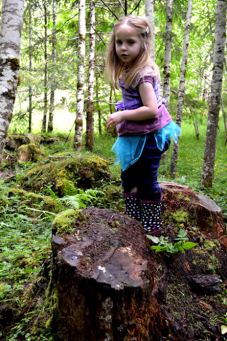 Laying the foundation for literacy involves becoming competent in several areas. First of all, children need the language skills to share, describe, and negotiate. In early childhood, socio-dramatic (or pretend/imaginative) play is rich with opportunities for this – children grow in the ability to tell the story of what they’re playing and negotiate back and forth as they adapt their story to those of their playmates. Vivian Paley (an early childhood education researcher) found that during pretend play children “talk more, speak in lengthier utterances, use more complex language (eg. future tense, interrogative clauses, conditional verbs, and mental state verbs) than when they are engaged in other activities.” Pretend play also builds a child’s ability to think symbolically, which is needed when learning that a written word stands for the object. It begins with being able to use one object symbolically as another (I know this is really a stick, but right now it’s my magic wand) and evolves to imagining oneself as someone or something else (I’m a big bear or a ninja). Our outdoor environment provides lots of opportunity for dinosaur bone hunts, animal rescue teams, pirates, and even baristas!
Children also need what is referred to as “print knowledge” and “print motivation” – they need to see what print is used for and want to use it for themselves. We might be in the outdoors, but we still read – storybooks, field guides, maps …. We record what we see by drawing or writing in our water resistant paper journals, we make lists of what we saw and refer back to them the next day, I model uses for writing when I record the day and then read it back during reflection time.
Another needed skill is phonemic awareness – being aware of how sounds work in words. This is where rhyming and sound change songs/stories and clapping songs/chants come in!
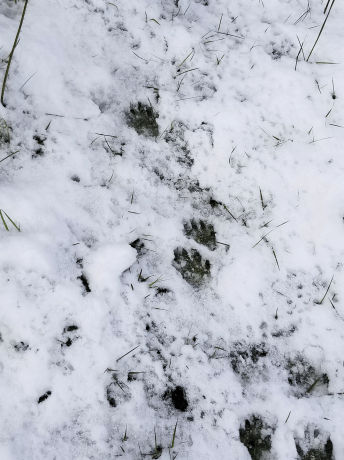 Our opportunities for math and science are continuous. We count, sort, make patterns, question, hypothesize, test, collect, engineer, build, measure, and reason!
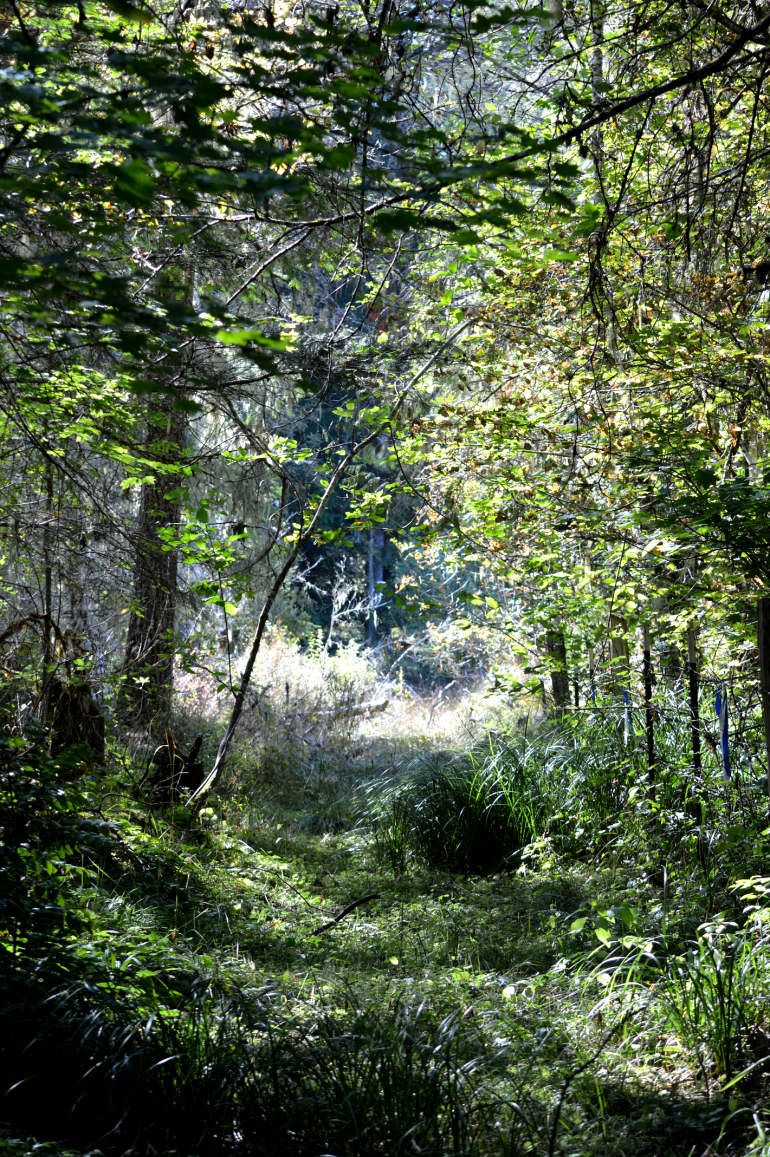
Where are you located? We have almost 10 acres of farm and forest land just north of Vernonia. Other natural sites in the Vernonia area may also occasionally be used.
Who provides the food the children eat? We provide a nutritious snack for our midmorning gathering and warm beverages on cold days. Children bring a filled water bottle – refills are always available.
Where do the children go to the bathroom? Both our outdoor classrooms are equipped with composting toilets. Water and soap for handwashing is always provided.
 Songbird Nature School